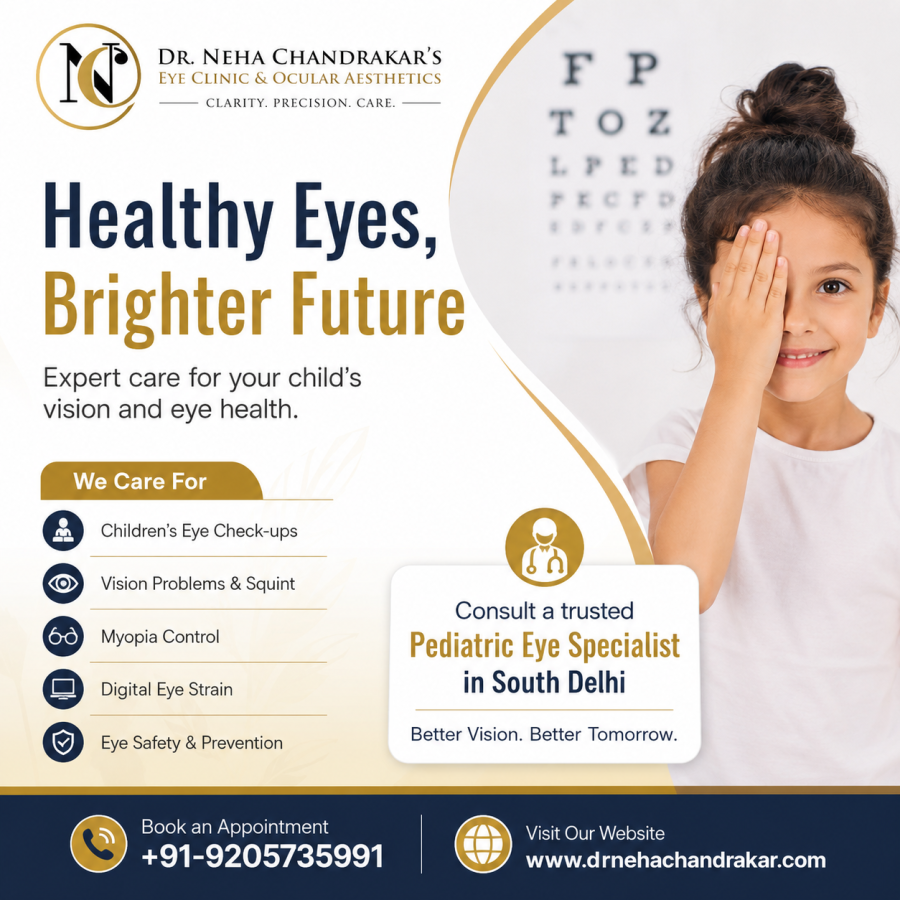
A child's vision plays a vital role in learning, development, confidence, and everyday activities. Unfortunately, many childhood eye problems go unnoticed because children often don't realize their vision is abnormal. Regular eye examinations can identify issues early and help prevent long-term vision loss.
If you're looking for a Pediatric Eye Specialist South Delhi, timely evaluation can ensure your child's eyes develop normally. At Dr. Neha Chandrakar's Eye Clinic & Ocular Aesthetics, Greater Kailash-1, New Delhi, comprehensive pediatric eye care is provided using modern diagnostic technology and evidence-based treatment approaches.
Whether your child is experiencing blurry vision, eye rubbing, crossed eyes, or difficulty reading, consulting an experienced pediatric eye doctor south Delhi can make a significant difference in their visual health and quality of life.
Why Children's Eye Health Matters
Children depend heavily on good vision for:
• Learning in school
• Reading and writing
• Sports and outdoor activities
• Social interaction
• Hand-eye coordination
• Overall brain development
According to pediatric eye care guidelines, many childhood vision disorders are highly treatable when diagnosed early. Delayed treatment may lead to permanent vision impairment, including amblyopia (lazy eye).
This is why parents should never ignore subtle signs of vision problems.
Common Eye Problems in Children
A qualified Pediatric Ophthalmologist in south Delhi commonly treats:
1. Refractive Errors
These include:
• Nearsightedness (Myopia)
• Farsightedness (Hyperopia)
• Astigmatism
Children may need prescription glasses for clear vision.
2. Lazy Eye (Amblyopia)
One eye develops weaker vision because the brain favors the stronger eye.
Early treatment offers the best results.
3. Squint (Strabismus)
The eyes do not align properly.
Symptoms include:
• Crossed eyes
• One eye drifting outward
• Poor depth perception
Treatment may include glasses, eye exercises, patching, or surgery.
4. Allergic Eye Disease
Common in children due to pollution, dust, pollen, and seasonal allergies.
Symptoms:
• Itching
• Redness
• Watering
• Eye rubbing
5. Blocked Tear Duct
Frequently seen in infants.
Signs include:
• Constant watering
• Sticky discharge
• Recurrent eye infections
6. Digital Eye Strain
Increasing screen time has made digital eye strain one of the most common reasons families visit a Pediatric Eye Specialist South Delhi.
Symptoms include:
• Eye fatigue
• Headaches
• Blurred vision
• Dry eyes
Signs Your Child Needs an Eye Examination Parents should schedule an appointment if their child experiences:
• Frequent headaches
• Squinting while watching TV
• Holding books very close
• Sitting too close to screens
• Poor school performance
• Eye rubbing
• Excessive blinking
• Double vision
• Crossed eyes
• Difficulty recognizing distant objects
• Sensitivity to light
• Constant watering
• White pupil in photographs
• Red or painful eyes
Even if your child has no symptoms, routine eye examinations remain important.
Causes of Vision Problems in Children Several factors can affect a child's vision.
Genetics Family history significantly increases the risk of:
• Myopia
• Squint
• Lazy eye
Excessive Screen Time
Long hours on phones, tablets, and computers can contribute to eye strain and may be associated with increasing rates of myopia.
Premature Birth Premature babies have a higher risk of certain eye conditions and should receive timely ophthalmic evaluation.
Nutritional Deficiencies Poor nutrition can affect overall eye health.
Children require adequate intake of:
• Vitamin A
• Vitamin C
• Vitamin E
• Omega-3 fatty acids
• Zinc
Eye Injuries
Sports injuries or accidental trauma require prompt evaluation by a pediatric eye doctor south Delhi.
How a Pediatric Eye Specialist South Delhi Diagnoses Eye Conditions
A comprehensive pediatric eye examination includes:
Medical History
The doctor asks about:
• Family history
• Birth history
• Previous eye problems
• School performance
• Visual complaints
Vision Testing
Age-appropriate methods assess:
• Distance vision
• Near vision
• Visual development
Eye Alignment Assessment
Checks for:
• Squint
• Lazy eye
• Binocular vision
Refraction Test
Determines whether glasses are needed.
Eye Health Examination
The front and back of the eye are carefully examined to detect infections, retinal disorders, congenital abnormalities, or other eye diseases.
Treatment Options for Children's Eye Problems
Treatment depends on the diagnosis.
Prescription Glasses
Correct refractive errors and improve learning ability.
Eye Patching
Used to strengthen a weaker eye in amblyopia.
Eye Exercises
Beneficial for selected binocular vision disorders.
Medications
Eye drops or medicines may be prescribed for allergies, infections, or inflammation.
Surgery
Some conditions such as congenital cataracts, severe squint, or blocked tear ducts may require surgery.
Lifestyle Changes
Children may benefit from:
• Reduced screen time
• Outdoor activities
• Healthy diet
• Proper reading posture
Benefits of Early Eye Care
Early diagnosis offers numerous advantages.
• Better academic performance
• Improved visual development
• Reduced risk of permanent vision loss
• Better eye coordination
• Improved confidence
• Enhanced sports performance
• Reduced headaches
• Early treatment of congenital eye diseases
• Healthier long-term vision
Regular visits to a Pediatric Ophthalmologist in south Delhi help ensure healthy eye development throughout childhood.
Tips to Protect Your Child's Vision
Parents can support healthy eyesight by following these simple habits.
Encourage Outdoor Play
Children should spend adequate time outdoors every day.
Limit Screen Time
Follow age-appropriate screen time recommendations and encourage regular breaks.
Follow the 20-20-20 Rule
After every 20 minutes of near work, look at something 20 feet away for 20 seconds.
Healthy Diet
Include:
• Carrots
• Green leafy vegetables
• Eggs
• Fish
• Citrus fruits
• Nuts
Good Reading Habits
Maintain:
• Proper lighting
• Correct posture
• Appropriate reading distance
Wear Protective Eyewear
During sports or activities with a risk of eye injury.
Schedule Regular Eye Exams
Routine eye check-ups help detect problems before symptoms appear.
When Should Your Child Have an Eye Check-up?
Experts generally recommend comprehensive eye evaluations:
• During infancy if advised by a pediatrician
• Around preschool age
• Before starting school
• Every 1–2 years thereafter, or sooner if symptoms or risk factors are present
Children with glasses or existing eye conditions may require more frequent follow-up based on their ophthalmologist's advice.
Why Choose Dr. Neha Chandrakar's Eye Clinic?
Parents across South Delhi, Greater Kailash, and New Delhi trust Dr. Neha Chandrakar's Eye Clinic & Ocular Aesthetics for compassionate, evidence-based pediatric eye care.
Why families choose the clinic:
• Comprehensive pediatric eye examinations
• Modern diagnostic equipment
• Child-friendly environment
• Personalized treatment plans
• Ethical and patient-focused care
• Convenient location in Greater Kailash-1
• Focus on early diagnosis and prevention
• Care for routine and complex pediatric eye conditions
If you are searching online for a trusted Pediatric Eye Specialist South Delhi, expert evaluation can help safeguard your child's vision for the future.
Conclusion
Healthy eyesight is essential for every child's growth, education, and confidence. Many childhood eye problems develop gradually and may not be obvious to parents or teachers. Regular eye examinations, early diagnosis, and appropriate treatment can prevent complications and support lifelong visual health.
If your child shows any signs of vision problems—or it's simply time for a routine eye examination—don't delay seeking professional care.
At Dr. Neha Chandrakar's Eye Clinic & Ocular Aesthetics, children receive comprehensive, compassionate eye care tailored to their individual needs.
Book an Appointment Today
Dr. Neha Chandrakar's Eye Clinic & Ocular Aesthetics
📍 Greater Kailash-1, New Delhi
📞 +91-9205735991
🌐 https://www.drnehachandrakar.com/
Protect your child's eyesight with timely care from an experienced Pediatric Eye Specialist South Delhi. Schedule your appointment today for a comprehensive pediatric eye examination.
Frequently Asked Questions
1. When should my child first see a Pediatric Eye Specialist South Delhi?
Children should have age-appropriate eye evaluations even if they have no symptoms. Earlier assessment is recommended if there are concerns such as crossed eyes, excessive watering, poor vision, or a family history of eye disease.
2. How do I know if my child needs glasses?
Signs include squinting, headaches, sitting close to the television, holding books very close, difficulty reading, or poor school performance. A comprehensive eye examination can determine if glasses are needed.
3. Can excessive screen time damage my child's eyes?
While screens do not permanently damage the eyes, prolonged use can lead to digital eye strain, headaches, dry eyes, and may contribute to increasing rates of myopia in children. Regular breaks and outdoor activities are recommended.
4. Is lazy eye treatable?
Yes. Lazy eye (amblyopia) is often successfully treated when diagnosed early using glasses, patching, vision therapy, or other treatments recommended by a pediatric ophthalmologist.
5. Why should I visit a Pediatric Ophthalmologist in south Delhi instead of a regular eye clinic?
A Pediatric Ophthalmologist in south Delhi has specialized training in diagnosing and treating eye conditions unique to infants, children, and teenagers using child-friendly examination techniques.