
Dr Neha Chandrakar Eye Care
Advanced eye care and oculo-facial aesthetics with precision, compassion, and patient-first guidance.

Dr. Neha Chandrakar | Cataract Surgery in Delhi
Modern cataract surgery with premium monofocal, multifocal, trifocal, and toric lens options.
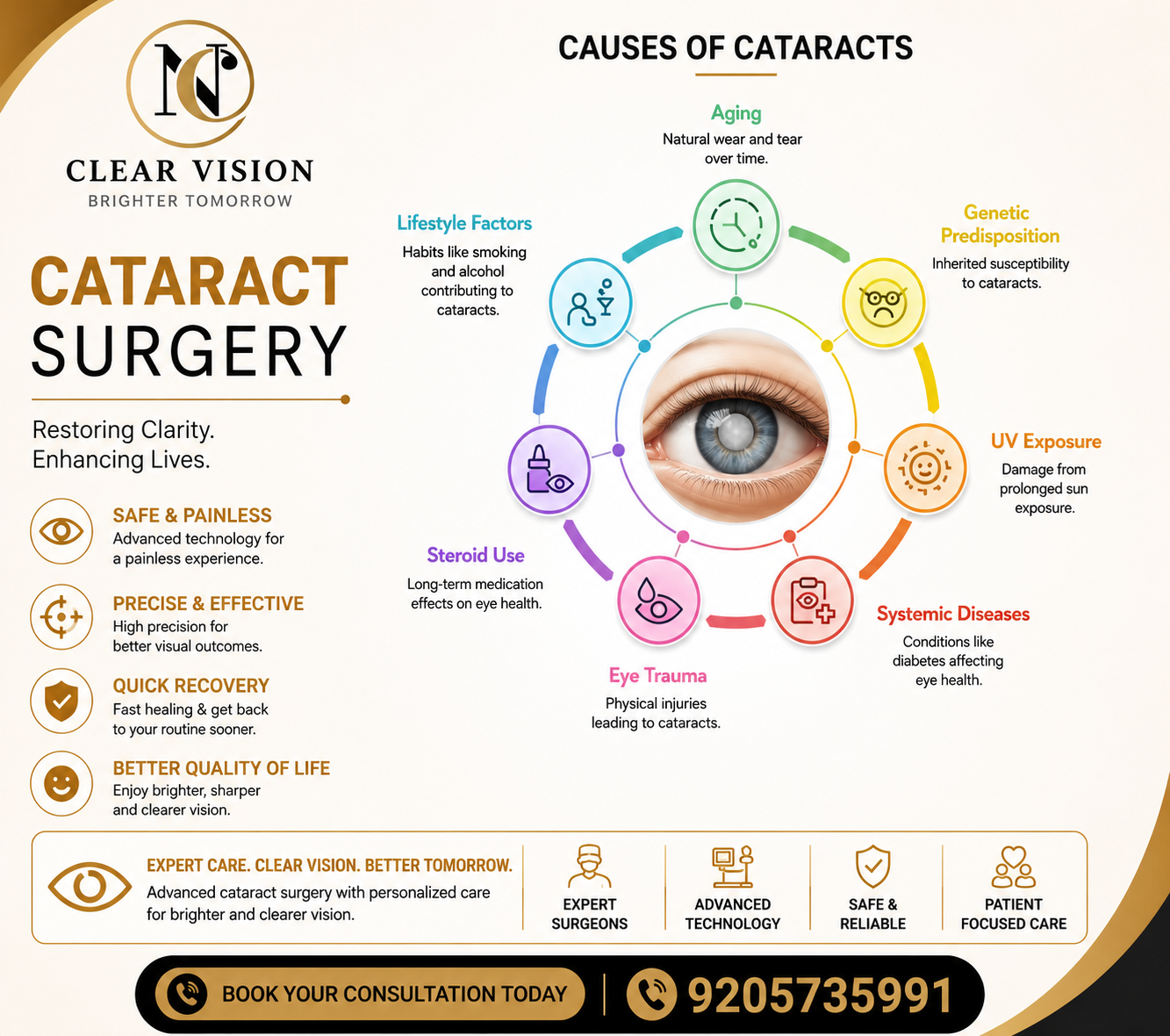
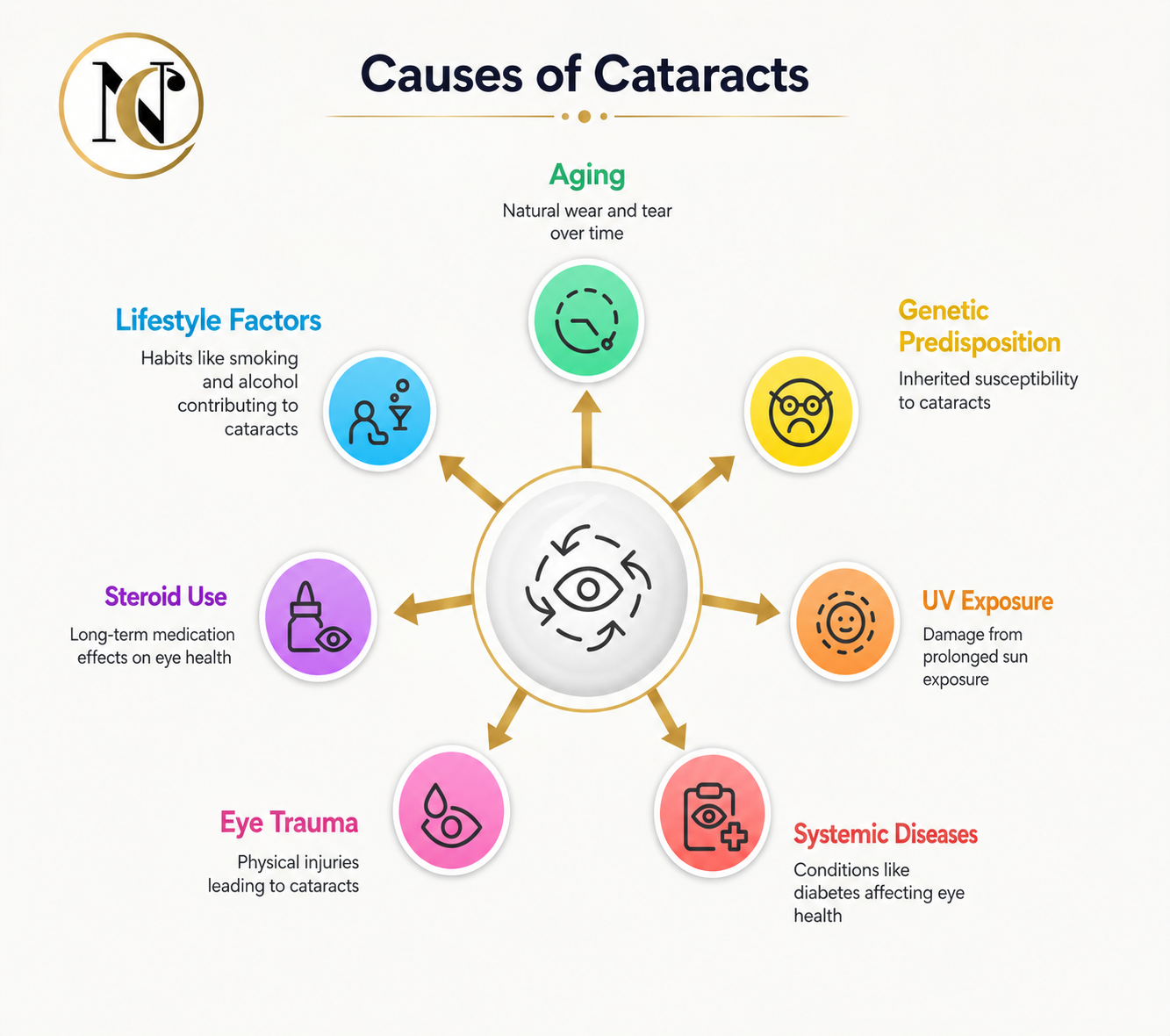
A cataract diagnosis can feel unsettling — but it's one of the most common, well-understood, and successfully treatable conditions in all of ophthalmology. If you or a parent has been told it's time to consider cataract surgery, know this: millions of people undergo this procedure safely every year, and most walk away seeing more clearly than they have in years.
As a top cataract surgeon in South Delhi, Dr. Neha Chandrakar has guided patients through this exact journey for over 11 years — combining advanced surgical technique with the kind of clear, patient communication that helps families feel genuinely at ease before, during, and after the procedure. Her clinics are easily accessible to patients across Delhi and New Delhi, including those travelling from AIIMS, Green Park, and Greater Kailash.
What Is a Cataract?
A cataract is simply a clouding of the eye's natural lens, which sits behind the iris and normally stays clear to help focus light onto the retina. Over time — usually due to age, though sometimes due to diabetes, injury, or prolonged steroid use — this lens can turn cloudy, scattering light instead of focusing it properly. The result is vision that gradually becomes blurry, dim, or hazy.
It's a natural part of aging for most people, not a disease to fear, and it develops slowly enough that many patients don't realize how much it's affected their vision until after surgery restores their clarity.
Common Symptoms to Watch For
- Cloudy, blurry, or "foggy" vision
- Increased difficulty seeing at night or with glare from headlights
- Colors appearing faded or yellowed
- Frequent changes in glasses prescription that don't seem to help
- Double vision in one eye
- Needing brighter light to read comfortably
If these symptoms sound familiar — whether for yourself or an aging parent — it's worth getting an eye evaluation rather than assuming it's simply "part of getting older." Patients from across Delhi NCR, including South Delhi, Green Park, and Greater Kailash, regularly visit Dr. Neha's clinic for this exact evaluation.
Why Early Treatment Matters
It's a common misconception that cataracts need to "ripen" or worsen significantly before treatment. In reality, waiting too long can make surgery more complex and recovery slower, while also increasing the risk of falls, reduced independence, and accidents like difficulty driving safely. Addressing cataracts earlier, once they start affecting daily life, generally leads to a smoother procedure and faster visual recovery.
How Cataract Surgery Works: Phacoemulsification
The modern, gold-standard approach to cataract removal is called phacoemulsification — a minimally invasive technique where a tiny ultrasonic probe gently breaks up the cloudy lens, which is then removed through a very small incision (often without any stitches needed). A new, clear artificial lens — called an intraocular lens (IOL) — is then placed to restore clear focusing.
The entire procedure typically takes 15-20 minutes per eye, is performed under local anesthesia (so it's painless), and most patients go home the very same day.
Choosing the Right IOL (Intraocular Lens)
One of the most meaningful decisions in cataract surgery is selecting the right replacement lens, since this directly affects how dependent you'll be on glasses afterward. Broadly, options include:
- Monofocal lenses — clear vision at one distance (usually far), with reading glasses typically still needed
- Multifocal lenses — designed to provide clear vision at multiple distances, reducing dependence on glasses
- Trifocal lenses — an advanced option offering near, intermediate, and distance vision for more complete glasses independence
- Toric lenses — specifically designed to correct astigmatism alongside cataract removal
Dr. Neha will walk you through which premium IOL option best suits your lifestyle, visual needs, and budget — there's no one "best" lens for everyone, only the right one for you.
What to Expect on Surgery Day and During Recovery
You'll arrive a little before your scheduled time for final preparation, including dilating eye drops. The procedure itself is quick and painless, and you'll rest briefly afterward before heading home — no overnight hospital stay is needed.
In the days following surgery, mild grittiness, light sensitivity, or slightly blurry vision is normal and improves quickly. Most patients notice significantly clearer vision within 24-48 hours, with full stabilization over the following 2-4 weeks. You'll be given simple eye drops and a brief list of precautions (like avoiding water in the eye and heavy lifting) during this period.
Why Choose Dr. Neha Chandrakar as Your Cataract Surgeon in Delhi NCR
- MBBS, DNB Ophthalmology, and FAICO-certified, reflecting rigorous surgical training and recognized expertise
- 11+ years of experience, including advanced surgical exposure at AIIMS Raipur and training at Venu Eye Institute
- Fellowship-trained in Oculoplasty, giving additional precision and care around the structures surrounding the eye
- Personalized IOL guidance — clear, honest conversations about which lens truly fits your needs, not a one-size-fits-all recommendation
- Conveniently located clinics in Greater Kailash 1, Panchsheel Park, and East of Kailash, with easy accessibility for patients from South Delhi, Green Park, AIIMS, and across New Delhi — among the most accessible options for cataract surgery in the region
Frequently Asked Questions
Is cataract surgery painful?No, cataract surgery is not painful. It is usually performed under local anesthesia, and patients feel minimal discomfort. At www.Drnehachandrakar.com, we ensure a pain-free experience, making it the best cataract surgery in Delhi.
How long is the recovery period?The procedure typically takes 15-20 minutes per eye. With our expert care, including the skills of the best cataract eye surgeon in Delhi, you can expect a smooth, quick process
Will I still need glasses after cataract surgery?It depends on the IOL chosen. Monofocal lenses often still require reading glasses, while premium multifocal or trifocal lenses are designed to significantly reduce or eliminate glasses dependence.
Can both eyes be done at the same time?Typically, cataract surgery is performed on one eye at a time, with the second eye usually done within a week or two, allowing the first eye to heal and vision to be properly assessed.
Where is the clinic located, and is it accessible from AIIMS or Green Park?Yes. The clinic is centrally located in South Delhi, making it a convenient option for patients travelling from AIIMS, Green Park, Greater Kailash, and other parts of Delhi and New Delhi.
Take the Next Step Toward Clearer Vision
Whether you're personally experiencing symptoms or helping a parent navigate this decision, the best next step is a proper evaluation — not guesswork. Dr. Neha will assess your eyes, answer every question honestly, and help you decide with full confidence and clarity.
📍 Clinics in Greater Kailash 1, Panchsheel Park, and East of Kailash, Delhi — easily accessible from AIIMS, Green Park, South Delhi, and Greater Kailash📞 Call now: 9205735991
Keywords- cataract surgery in South Delhi, best cataract surgeon in South Delhi, top cataract surgeons in Delhi ,cataract surgery near me
Why Choose Dr. Neha?
Elite credentials, advanced tech, and patient-first care in one place.
Elite Credentials
FAICO certified and recognized by the IMA for distinguished service.
Advanced Technology
Trained on latest ophthalmology and refractive care platforms.
Specialized Expertise
Precision vision correction and aesthetic eye surgery in one practice.
Patient-Centric Care
Personalized plans crafted around your lifestyle and eye health needs.
Book Your Consultation
Call or WhatsApp Dr. Neha Chandrakar's clinic for appointment support.
Call 9205735991 WhatsApp